The Kerala and the World Economy Conference 2026
23–24 February 2026
The Centre for Development Studies (CDS) organised The Kerala and the World Economy Conference 2026 on 23–24 February 2026 under the theme “Kerala in Transition: Building an Inclusive Economy in a Shifting Global Order.” The conference brought together eminent scholars, policymakers, researchers, and students from diverse disciplines to deliberate on Kerala’s development trajectory within the changing global economic landscape. It served as a platform for interdisciplinary dialogue on the opportunities and challenges confronting the state amid rapid economic, technological, and social transformations.
The two-day programme comprised keynote lectures, thematic technical sessions, oral and poster presentations, a documentary screening, and a book discussion and release session. A total of 20 research papers were presented, including 17 oral presentations and three poster presentations, covering a broad range of issues related to Kerala’s economy, society, and its evolving engagement with global processes.
The inaugural keynote lecture by Prof. K. P. Kannan introduced the concept of “New Malayali Capital,” highlighting how migration, remittances, entrepreneurship, and diaspora networks have created new forms of economic and social capital in Kerala. The lecture examined the transformative role of international migration, particularly to the Gulf region, in shaping the state’s development experience. It also reflected on emerging technological transitions and the potential implications of artificial intelligence for employment, labour markets, and future economic opportunities.
The second keynote address by Prof. Chinmay Tumbe, titled “The Rise of the West in India,” explored the historical and geographical determinants of regional development. Beginning with rainfall as a key developmental indicator, the lecture demonstrated how geography, migration, trade networks, and urbanisation have influenced India’s regional economic trajectories. His observation that “water is the destiny of India” underscored the enduring significance of natural resources in shaping long-term patterns of development.
The third keynote lecture by Prof. Sunil Mani focused on the emergence of knowledge-based industries in Kerala. The lecture examined how the state has progressively transformed structural constraints into opportunities through sustained investments in education, research, innovation, and human capital. It highlighted the growing importance of knowledge-intensive industries, technological innovation, and research ecosystems in driving Kerala’s future economic growth.
The concluding keynote by Prof. M. Vijayabaskar examined the challenges and opportunities associated with subnational industrial development, drawing important lessons from Tamil Nadu’s industrialisation experience. The lecture emphasised the critical role of institutional arrangements, industrial policy, governance, and ecosystem development in enhancing regional industrial competitiveness. Collectively, the keynote sessions offered complementary perspectives on migration, geography, innovation, industrialisation, and regional development.
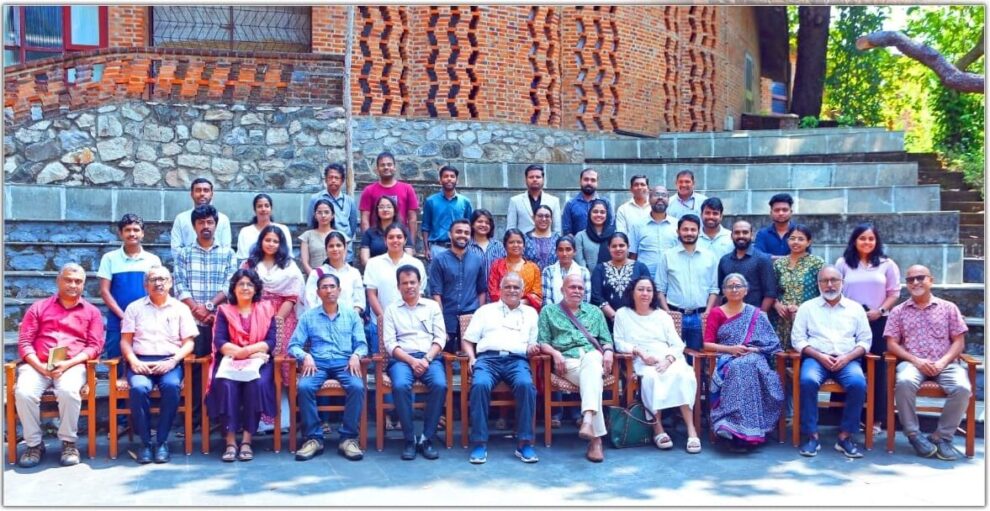
The thematic technical sessions covered a wide spectrum of contemporary development issues, including labour markets, gender, migration, environmental sustainability, industrial development, fiscal governance, social inclusion, and public policy. The presentations reflected diverse methodological approaches and generated rich discussions on Kerala’s evolving development challenges in a rapidly changing global environment.
Several presentations examined labour market dynamics and migration, highlighting how labour mobility influences employment patterns, household aspirations, livelihood strategies, and demographic change. These discussions were particularly relevant for sectors such as agriculture, where labour shortages and changing workforce characteristics continue to shape production decisions and rural transformation.
Beyond the formal academic sessions, the conference featured a documentary screening on Kerala’s inland waterways, which provided valuable insights into the interconnectedness of geography, ecology, transport, and livelihoods. A book discussion and release session further enriched the programme by stimulating critical conversations on labour mobility, migration, and social change, complementing many of the themes explored during the conference.
The conference also underscored the growing importance of integrating high-quality secondary datasets generated by national statistical agencies and research institutions into development research. Participants highlighted the value of large-scale datasets produced by the Ministry of Statistics and Programme Implementation (MoSPI) and other public institutions for analysing long-term economic and social trends, facilitating evidence-based policymaking, and strengthening empirical research on Kerala and comparable regions.
The conference successfully fostered meaningful dialogue among academics, policymakers, and researchers, reinforcing the Centre’s commitment to advancing evidence-based research on Kerala’s development in an increasingly interconnected global economy. The deliberations generated fresh insights into migration, industrial transformation, technological change, environmental sustainability, and inclusive development, while identifying important avenues for future research and policy engagement.